Frequencies of Bonsai Repotting: Insights on Various Species' Growth Speeds
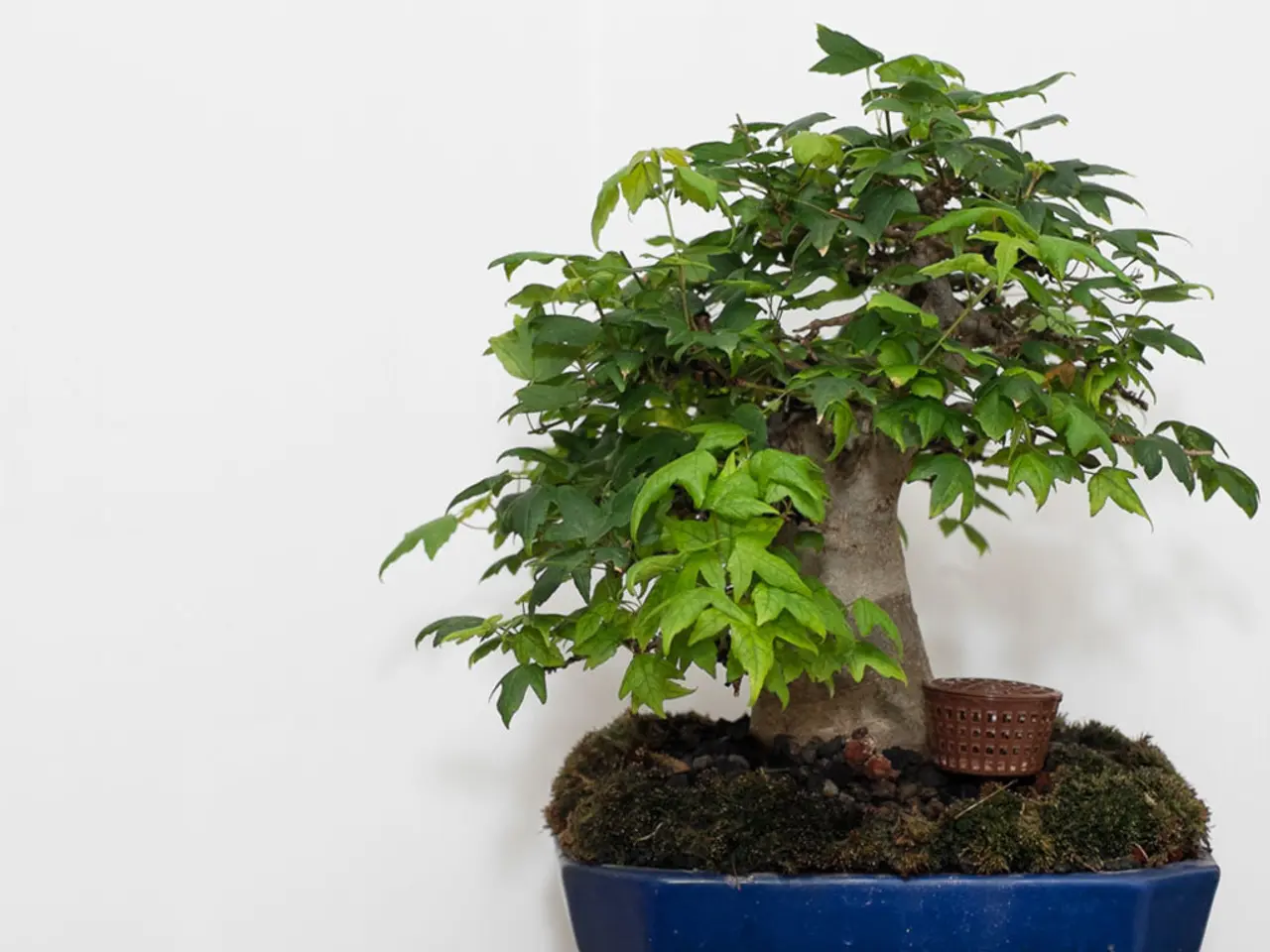
In the world of bonsai, repotting is an essential practice that ensures these miniature masterpieces thrive. Regular repotting provides the necessary space for fast-growing species like Ficus and Juniperus bonsai to expand their roots, preventing compromised health, reduced foliage, and stunted growth. The ideal pot size increase for a bonsai during repotting is modest, ranging from 1-2 inches in diameter. This allows adequate room for root growth without overwhelming the bonsai. Conversely, slow-growing species like juniper, pine, and spruce bonsai typically require less frequent repotting, every 4-5 years for juniper, every 5-6 years for pine, and every 6-7 years for spruce. The art of bonsai cultivation is a delicate dance where the rhythm of repotting synchronises with the unique melody of each species' growth rate, creating a harmonious balance that allows the bonsai trees to thrive. When repotting, it's generally not recommended to use the same pot with fresh soil as it can lead to root constriction and hinder growth. Instead, choose a slightly larger pot to accommodate root expansion. During the dormant season, repotting can be safe for bonsai, but it's vital to handle roots gently, prune carefully, and provide peak care to guarantee a successful shift and healthy recovery. When handling delicate or fragile roots during repotting, exercise utmost care to minimise root disturbance. A personalised repotting schedule should consider the unique needs of each species in a bonsai enthusiast's collection, including growth rate, root development, soil quality, environmental conditions, and tree age and size. Unfortunately, the search results do not provide specific information about bonsai pairs that require more frequent repotting than poplars due to faster growth. After repotting, water the bonsai thoroughly, yet avoid overwatering, which can lead to root rot. Monitor the soil's moisture, and water only when the top inch of soil feels dry to the touch. With careful repotting and nurturing, your bonsai will continue to flourish, providing a source of joy and tranquility for years to come.
Read also:
- Naloxone dispensers installed at five train stations in Cook County Health and CTA initiative
- Transitioning to Environmental Profitability
- Maruti Suzuki bolsters growth trajectory through GST benefits, Victores launch, and safety improvements focus
- Building Association of Solingen Engaged in Savings and Construction Projects