
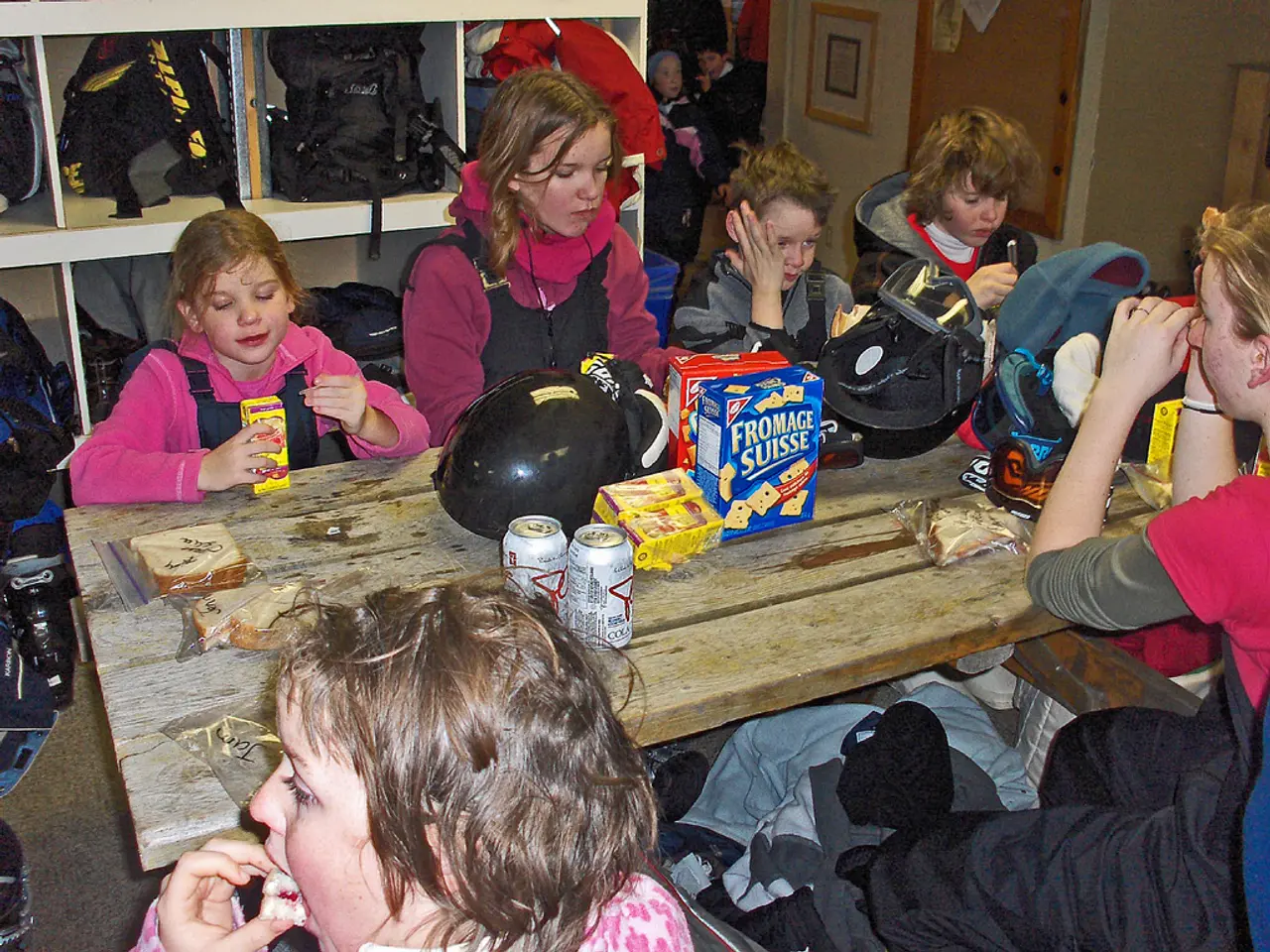
Scheduled lunchtime meal solutions for students: feeding strategies to consider
### Balanced and Nutritious School Lunches for Growing Minds
Ensuring a child's school lunch is both nutritious and appetising is a common challenge for parents. To help address this, experts from Rospotrebnadzor have provided guidelines for schoolchildren's nutrition.
The guidelines emphasise the importance of balanced nutrition for school-aged children, as it promotes physical and mental development, reduces fatigue, and supports a growing organism's ability to protect itself from infectious disease pathogens.
A balanced school lunch should include a variety of key components:
- **Protein:** Essential for sustained energy and focus, examples include cheese, yogurt, hard-boiled eggs, lunch meat, rotisserie chicken, and nut/seed butters (if allowed). - **Whole Grains:** Provide lasting energy and brain support. Options include whole wheat bread, brown rice, whole grain crackers, or tortillas. - **Fruits and Vegetables:** Add vitamins, minerals, and fiber, plus color and crunch. Consider apples, grapes, berries, cherry tomatoes, carrots, cucumber, and spinach. - **Healthy Fats:** Avocado, seeds, and nut/seed butters contribute to fullness and nutrient absorption. - **Dairy or Alternatives:** Cheese sticks, yogurt cups, or fortified plant-based options support calcium intake. - **Fun Snacks:** Small treats like a few chocolate chips or homemade muesli bars can make lunch special. - **Hydration:** Always include water or a small bottle of milk.
To keep lunches interesting, it's important to rotate proteins, grains, and produce, and to make meals visually appealing with bento boxes, cut sandwiches into fun shapes, or include colorful fruits and vegetables. Involving children in the process can also increase the chances they’ll eat their lunch.
Preparing components like hard-boiled eggs, pasta salad, or cut veggies in advance can make quick work of busy mornings. However, it's crucial to be aware of school allergy policies, especially regarding nuts and seeds.
Here are some menu ideas:
| Day | Main Dish | Sides | |----------|----------------------------------|----------------------------------------| | Monday | Hummus & veggie wrap[1][2] | Sliced cucumbers, grapes, string cheese[1] | | Tuesday | Egg & cheese English muffin[1] | Carrot sticks, apple slices, popcorn | | Wednesday| Pasta salad with chicken[1] | Cherry tomatoes, blueberries, crackers | | Thursday | Turkey & cheese roll-ups[3] | Raspberry, olives, pita & hummus[3] | | Friday | DIY “Lunchable” (crackers, cheese, meat)[3] | Celery sticks, chocolate chips, grapes[3] |
Remember to encourage your child to wash their hands thoroughly before eating, and to eat at the same time every day while sitting at the table, chewing food thoroughly.
In conclusion, a balanced, tasty school lunch combines protein, whole grains, fruits, vegetables, healthy fats, and a touch of fun. Focus on variety, colour, and texture, and involve your child in the process to ensure the lunch comes home eaten—not ignored.
- To support their family's health and wellness, parents may consider adopting a balanced lifestyle that includes nutrition-focused cooking, home-and-garden practices, and maintaining a focus on fitness-and-exercise.
- Encouraging parenting skills that involve children in meal preparation can contribute to their understanding of food-and-drink choices while fostering a lifelong interest in health and nutrition.
- Beyond school lunches, emphasizing the importance of proper nutrition is crucial for promoting overall family health, reducing health risks, and boosting energy levels for various activities at home and in the garden.
- Additionally, engaging in science-backed health activities, such as researching nutritional facts, experimenting with home-made recipes, and participating in home-and-garden projects that emphasize wellness, can strengthen family bonds while improving everyone's lifestyle.
- By applying lifestyle principles from science, such as adequate hydration, rest, and balanced meals, families can create a supportive and nourishing environment that fosters growth, learning, and resilience.